A World Without Gendered Pronouns
Pronouns in English
Gendered pronouns are quite important in modern English. It’s not just a word used to substitute a noun, it’s now a title representing one’s personal identity. It’s attached to emails, available for strangers to see as part of your online presence, and is often the first thing to introduce yourself as in webinars. My own is she/they.
But in China, until the 1920s, the concept of gendered pronouns didn’t exist. People were just people. When communicating, what mattered were you, me, and that other person. It didn’t matter if that person was male or female. In fact, for a long time, it didn’t even matter if that other being was even human. Mountains, animals, monsters, friends, they were all that “other entity.” But with the introduction and translation of Western literature, knowing whether that other person is male or female became increasingly more important.
Though I grew up in the West, English is my second language. Thus, I wonder sometimes why Western culture put so much emphasis on knowing whether that third person we’re talking about is male or female. Does people’s gender matter more than what they do? Is that the first thing that defines them above all else?
Let’s consider for a moment what it would be like if concept of gendered pronouns didn’t exist. What kind of effect would that have on society? And how would introducing gendered pronouns to such a society change the way people think about gender identity?
I wrote this as an interesting historical event in the course of language evolution. I wrote it in an objective way, stating only the facts, about a topic I was curious about. I researched the topic, navigated against modern-day exaggerations and looked at original publications at the time that debated the positives and negatives of introducing gendered pronouns. Perhaps in writing about the etymology of the Chinese word “it” before “he/she” might have led to some misconceptions.
Still, it’s an interesting history. There’s enough hidden and banned these days, that something simple like how pronouns came to be in the Chinese language shouldn’t make me doubt whether or not I should publish an article about the topic.
So this time, before giving away too much of what the initial reaction entailed, let’s dive in and learn what Chinese pronouns are currently like, and the history behind each word.
Pronouns in Modern Chinese
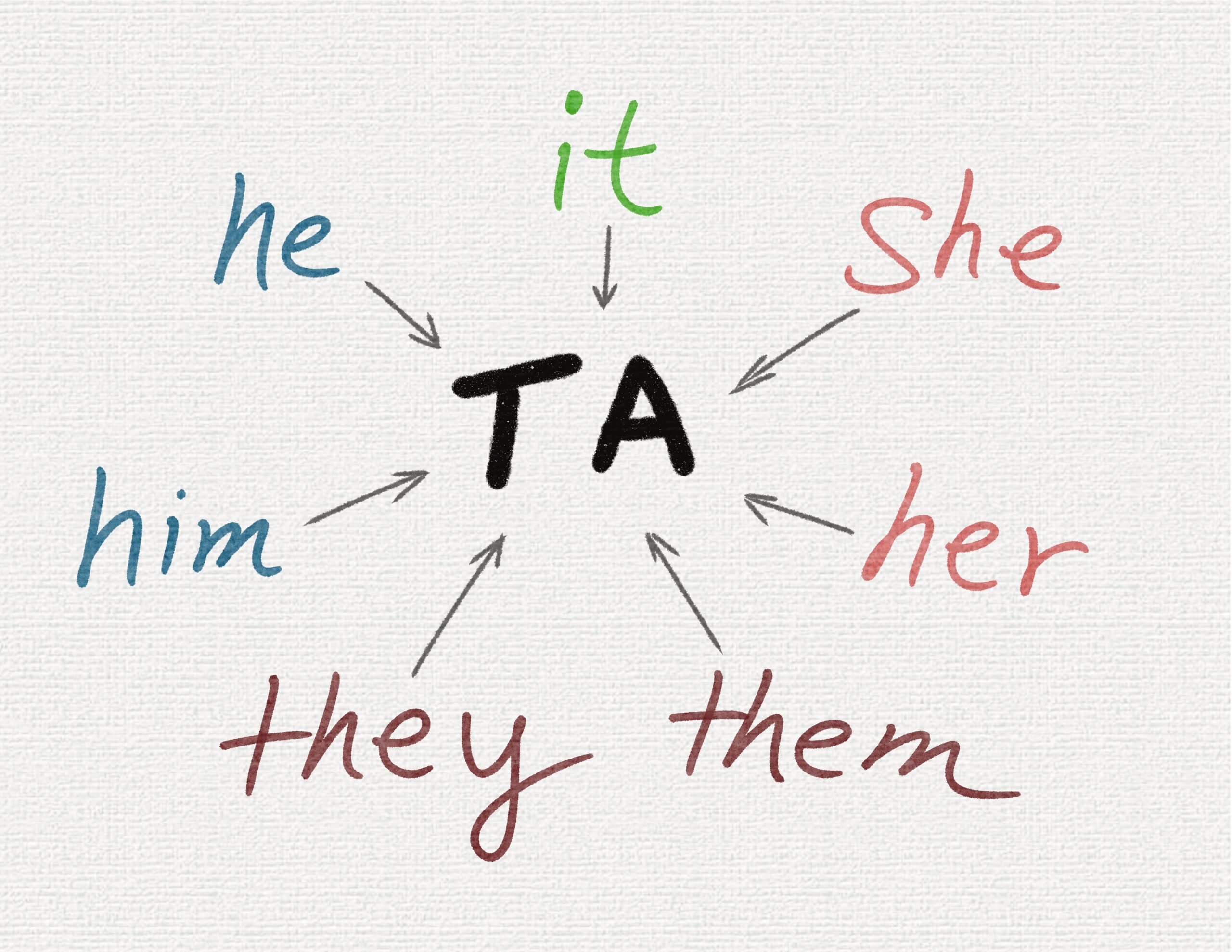
When spoken, he, she, her, him, and it in modern Chinese are all an indistinguishable tā. You never have to worry about saying the right pronoun, as it’s always going to be tā, whether it’s a person, a chair, or a cat.
In writing through, different characters are used:
- 它 – it (inanimate objects and animals)
- 他 – he/him and also the gender-neutral default pronoun for people
- 她 – she/her
While 它 and 他 have ancient roots as generic pronouns, the feminine 她 was a deliberate invention during the New Culture Movement in the early 19th century. Its addition to the Chinese language sparked significant debate, in perhaps unexpected ways. To understand why, let’s go back to a time when there was no gendered pronouns.
History of Chinese Pronouns
That nonhuman other thing
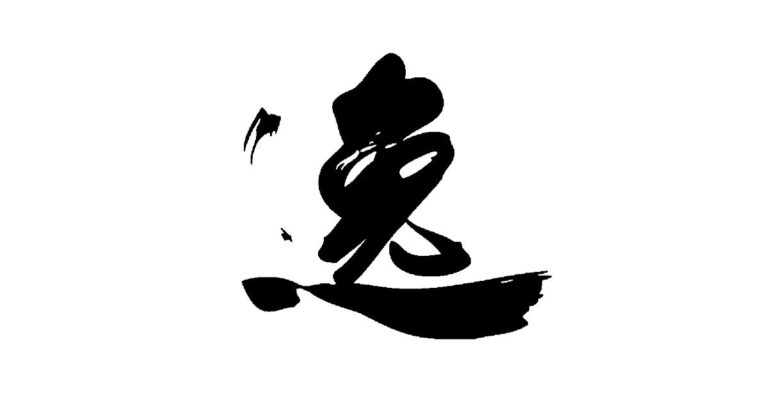
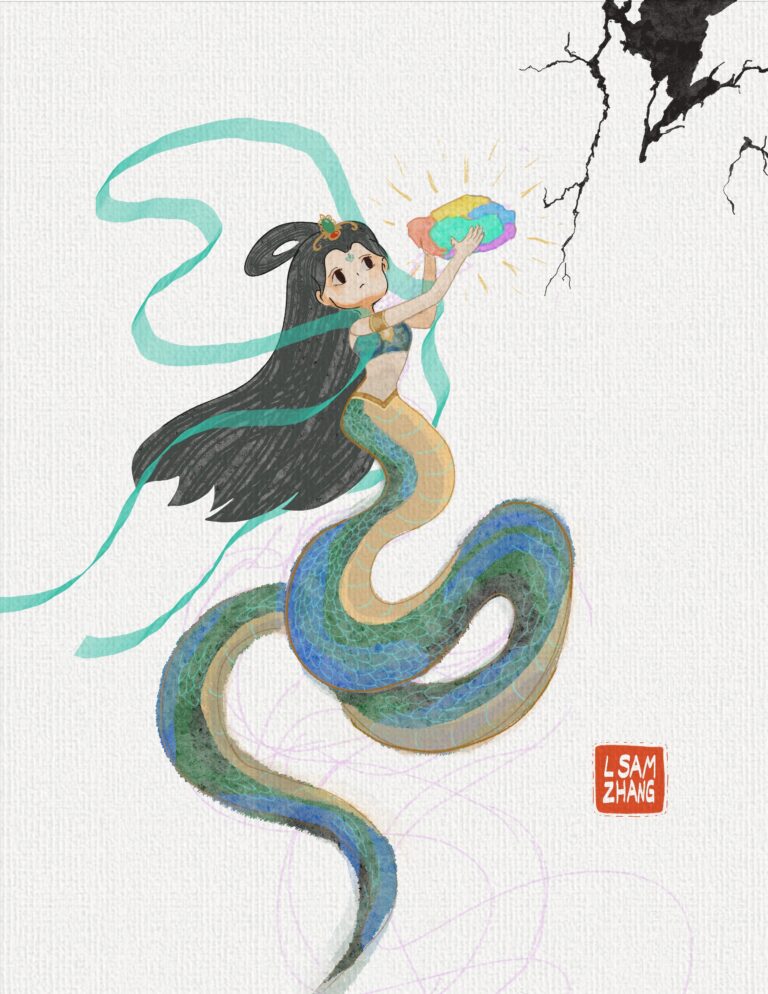
Interestingly, the character 它 first appeared in oracle bone script (Shang Dynasty, c. 1250 BCE) as the original pictograph for the word “snake.” As part of our evolutionary biology, humans are naturally fearful of snakes. They are something other—slithering, insidious, dangerous. And so, through thousands of years of language evolution, the word for snake naturally came to mean “other”, as in “Watch out for that other thing!” or “Something else is there!” Something that’s not human.
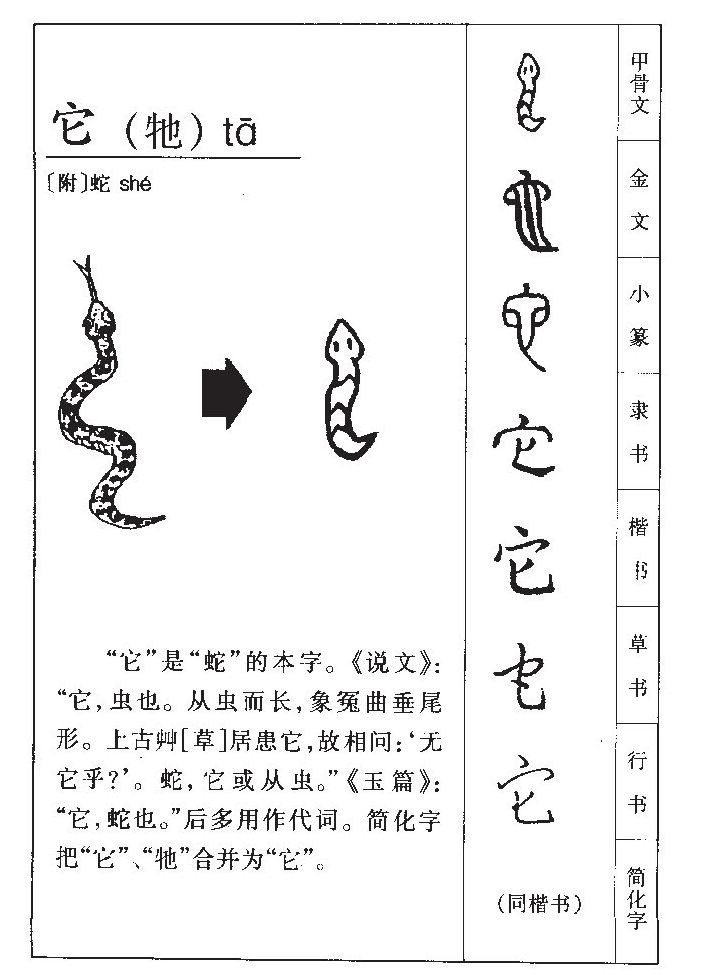
To avoid confusion, the bug radical 虫 (chóng) was later added to 它 to create a new character specifically for “snake”: 蛇 (shé). This freed up 它 to function purely as a pronoun.
That other human
The character 他 came after that. It combines the person radical (亻, rén) with the phonetic component 也 (yě), to mean “another person,” “someone else,” or “that other one.”
That other person had no gender. It could be anyone, or anything. In fact, one of the earliest usage of 他 in a poem was referring to that other mountain over there.
Indeed, for a long time, 他 and 它 were used interchangeably to mean “other/another.” You can think of 它 as the older, more abstract form, and 他 as a later form that loosely specified the “other” was a person, sometimes.
The main thing is that neither “它” nor “他” in ancient Chinese specifically meant “he,” “she,” or “it.” For example, instead of “he did it” or “she did it,” it was more like “some other did it.” Gender didn’t matter. All that mattered was that it wasn’t you or me, it was another person (or thing).
Only when the Western concept of “she” was introduced, did third-person pronouns became a thing in Chinese.
The Birth of “She” in a Modernizing China
The need for a word that specifically points to “that other female person” came from difficulties in translating Western texts.
The first Protestant missionary to China, Robert Morrison, awkwardly translated “she” as “他女人” (other female person) in his early 19th-century dictionary. Nowadays, “他女人” reads as “his woman,” but remember, this was before 他 became he/him. For Morrison, the distinction between him, her, and it was important enough for him to come up with “他男” (that other man), “他女” (that other woman), “他物” (that other thing). Modern readings of his translations are hilarious.
Still, the need for new pronoun that distinguished the sexes became a topic of debate among intellectuals of the New Culture Movement. They aimed to modernize Chinese into a simpler, more vernacular language in order to improve literacy. In 1918, the influential writer Zhou Zuoren mentioned that his colleague, the poet and linguist Liu Bannong, had proposed creating the character 她 by replacing the person radical 亻in 他 with the woman radical 女. (I thought Liu Bannong was in Paris translating an opera, maybe Madam butterfly, when out of frustration, he came up with the word. But apparently, that’s a popularized story that came about in connection to the poem he wrote that later became a popular song. I’m not going to get into that here.)
There were quite a lot of debate regarding the addition of a female specific pronoun:
Men thought it was a symbol of equality
The group of intellectuals who created the word 她 were mostly men. They thought 她 was a symbol of equality and independence, that women deserved to have their own pronoun. In the essay they published to defend this new word, they even fiercely criticized the trampling of women’s personhood by the patriarchal society, stating that:
Regarding men’s attitudes toward women, there are only two kinds of doctrines. The first is to invent all kinds of fine-sounding names to lure women into a trap, making them abandon their own female personhood — this is called the “doctrine of seduction.” The second is to look down on women because they seem weaker and more timid than men, refusing to regard women as “human beings” equal to men, and consequently denying women’s personhood — this is called the “doctrine of snobbery.”
These poets, playwrights, and authors then began to use the word 她 in their works, thus leading to the popularization of the pronoun.
Opponents of the new she/her 她
Opponents of the word 她 came from two groups of people with vastly different perspectives.
One group were the traditionalists who wanted to preserve Chinese culture. The great historian Chen Yinke for example, argued that the grammars of Western languages were all different from one another and far from perfect, and that there was simply no need for the Chinese to blindly imitate them. Throughout his entire life, Chen Yinke consistently used 伊 to refer to women and never once used the character 她.
The other group, came from the opposite extreme: modern feminist activists. In their view, using a special character specifically to refer to women was precisely a manifestation of not treating women and men equally. One particular feminist wrote:
Don’t we advocate for erasing the boundaries between men and women? I recall that some people used to criticize the practice of addressing women as ‘ladies’ — isn’t using this character ‘她’ essentially the same thing? If we make such distinctions, then every pronoun related to women should have a female radical added to it. Is this really what we call ‘new culture’? Is this something that ought to be promoted?
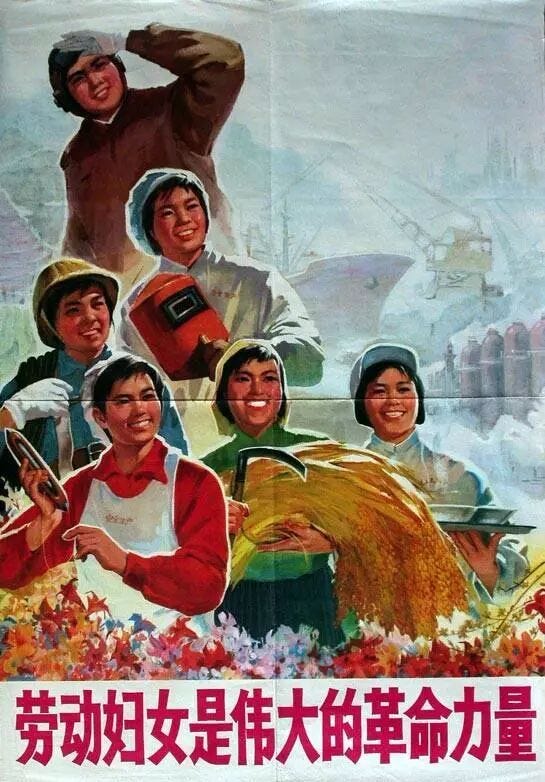
Such comments came as a result of the May Fourth Movement, which led to an era of rather extreme gender equality. By the 1960s, the phrase “We love not rouge and powder but sturdy uniforms” had confined women’s aesthetics to a realm of “genderless characteristics.” The relationship between men and women was simplified into that of “comrades.” Much like Rosie the Riveter, the “Iron Girls’ Brigade” and “Women’s Oil Extraction Team” replaced idealizations of beauty. The idols of that era were those who never cared about their own appearance or personal emotions. Women of that era had become people without gender, a quality that can still be seen in the Chinese senior citizens who are 80+ these days.
How 她 Impacted Gay Culture and Made It “Other”
Awkwardness of gendered pronouns
The binary pronoun system contributed to what scholars call “implicit othering.” It was no longer easy or natural to express same-sex desire without specifying gender. When referring to one’s partner, one can no longer write a simple tā without the language now forcing clarification.
This awkwardness from using implicit gendered pronouns mirrors the broader social response to homosexuality in modern China: not violently condemned, not openly accepted, but tolerated as something that’s “other” than what’s “normal.”
But in ancient Chinese culture, there was an “aesthetics of implicitness” (含蓄美学) when it came to same-sex relationships. It was a principle that valued suggestion over statement, implication over explication. Sure, it was not completely out in the open, but same-sex relationships were often viewed with a sense of purity and beauty instead of the Western views of sin.
How Ancient China Viewed Homosexual Relationships
Unlike medieval Europe, which sometimes punished homosexuality with death, China never had laws that systematically persecuted same-sex relations. As long as it did not disrupt family lineage obligations (producing heirs), pretty much anything can be overlooked.
In fact, same-sex relationships in China were well documented and sometimes celebrated. Words like 分桃” (shared peach) and “龙阳之好” (Lord Longyang’s preference) entered the language even before Emperor Qin unified the country and the written language (pre 221 BCE). Several Han dynasty (206 BCE–220 CE) emperors had named male favorites. For example, Emperor Ai would cut his sleeve to avoid waking his male lover Dong Xian, and thus the idiom “断袖之癖” or “The habit of cutting the sleeve” came to mean a man’s preference for other men.
By the Jin dynasty (1115–1234), homosexuality had become common among the upper classes and was frequently mentioned in official reports. It was seen as a more pure form of love compared to relationships between men and women.
Western LGBTQ+ concepts clashed directly with China’s “aesthetics of implicitness”
The Western LGBTQ+ concepts of explicit declaration and celebration clashed directly with China’s “aesthetics of implicitness.” Silent acceptance was no longer enough. Artistic euphemisms were replaced with labels. Tolerance through discretion seemed insufficient when compared to legal rights. Activism and pride parades—visible identity—became an important part of the gay culture.
Even today, many older Chinese people express confusion about LGBTQ+ activism: “Why do you need to announce it? Just live your life quietly.” But language is the scaffold upon which thoughts are formed. Once 她 was introduced, the idea of gender identity as something to be specifically labeled and publicized was perhaps inevitable.
New gender neutral they/them “TA”
Now that Chinese have gendered pronouns, it had a new problem to solve: What to do when you need to indicate a gender neutral they/them?
To solve the problem that wasn’t a problem before the introduction of 她, Chinese netizens have created the word “TA”. From social media posts it evolved into a new, real word. Indeed, TA is now widely used on advertisements and public announcements.
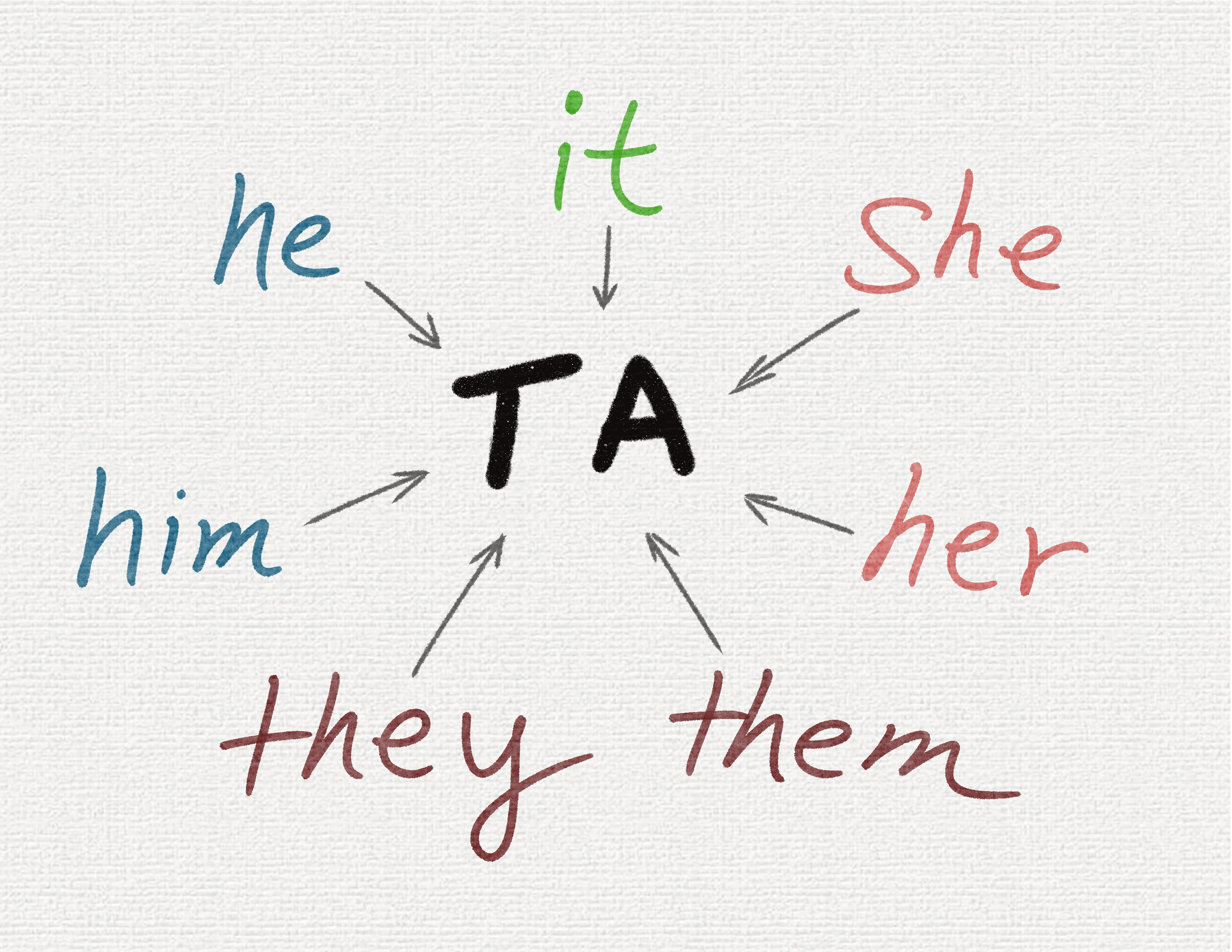
And so we’ve come full circle, back to having a gender neutral “TA” to be used as the most socially accepted pronoun. Like “APP” (pronounced A-P-P, which has replaced the Chinese word for software apps), TA is another “Chinese” word written with the alphabet.
Like how Chinese words (hanzi) became part of the Japanese and Korean language (kanji and Hanja), maybe in a thousand years, English will become part of the Chinese vernacular. I hope not. I kind of wish it would go the other way toward a more representative image based language. (But not quite like emojis. 😜)
It’s much slower to understand words when we have to first sound it out, then process the meaning. It’s much more efficient to utilize the facial recognition portions of our brain to immediately associate meaning with words, like in the case with Chinese. (Oops, the neuroscientist part of me is leaking out again.)
English also didn’t have a “she”
In the course of researching this, I learned that the word “she” didn’t exist in English either till a thousand years ago.
So apparently, in January 2000, the American Dialect Society (ADS) held a vote for “Word of the Past Millennium” (covering the years 1000-1999). In the end, the word “she” defeated “science” by a vote of 35 to 27.
Before the year 1000, the Old English word “hēo” was used for both “she” and “they,” which often led to confusion against the masculine “he.” The word “she” came around the 12th century.
I wonder if its original intent was also to make women more “other” and “different” from men.