Nüwa Patching the Sky
Last time, we explored how Nüwa created humans from mud by the river. This initial group of humans lived peaceful and happy lives until conflict among the gods shattered their idyllic world.
The great calamity began when the water god Gonggong1 clashed with the fire god Zhurong.2 There isn’t a clear consensus as to how their fight began, (though I will discuss four possible causes in the Historic Deep Dive section below). What everyone can agree on is that the result was devastating: After being defeated in a fierce battle, Gonggong, ashamed and enraged, hurled himself against Mount Buzhou,3 which happened to be one of the great pillars supporting the heavens.
From that earth-shattering impact, the pillar broke with a deafening crack. A massive hole was ripped in the celestial dome, and torrents of water burst through, flooding the world and swallowing up villages and fields. At the same time, the earth’s crust splintered into deep, gaping chasms. From the broken mountains, great wildfires raged across the land. Freed from their hidden domains, vicious monsters and giant birds emerged from the burning forests to prey on the terrified people. This cascade of apocalyptic disasters led to a time of unimaginable suffering, and humanity was pushed to the very brink of extinction.
From her celestial abode, Nüwa looked down upon the world and couldn’t bear to do nothing while her children suffered. Though it would be an enormous task, she vowed to repair the sky and destroy the monsters to save her people.
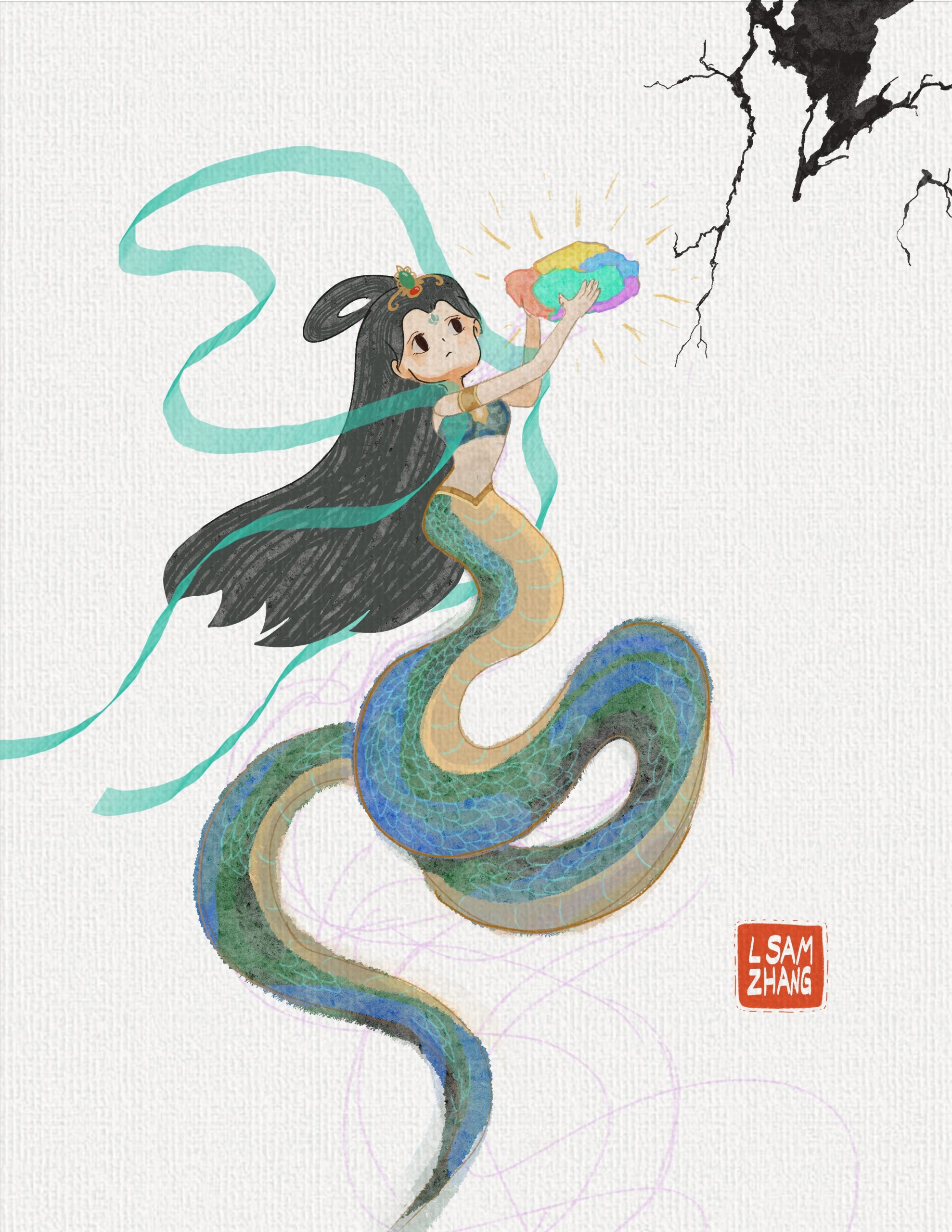
In order to repair the sky, Nüwa collected the Five-Colored Stones associated with the five elements—metal, wood, water, fire, earth—the basic substances that constituted the world. She then smelted these stones into a brilliant, thick, and iridescent molten liquid, spending 81 days to refine the material.
Some scholars believe that a massive meteorite impact event lies behind the legend of the Five-Colored Stones. As the meteorite streaked across the sky, it scratched a colorful contrail across the firmament. The large rocks that fell from above must have scared the ancient people into believing that the sky was falling. The resultant crater from the impact could explain why the earth opened up in the legend. The colorful meteorite fragments then became the five-colored stones in the story.
Since these special rocks had fallen from the sky, rocks must then be used to patch the hole in the sky. Thus the legend was passed down of Nüwa patching the sky with five-colored rocks, instead of materials such as fabric or plant matter.
Carrying the divine molten material, Nüwa ascended the highest peak of the legendary Kunlun Mountain4 and began her delicate yet arduous repair work. Each patch she laid bonded with the very fabric of the heavens. As she worked, the torrent of celestial water lessened, the howling gales subsided, and the sky began to regain its original azure hue.
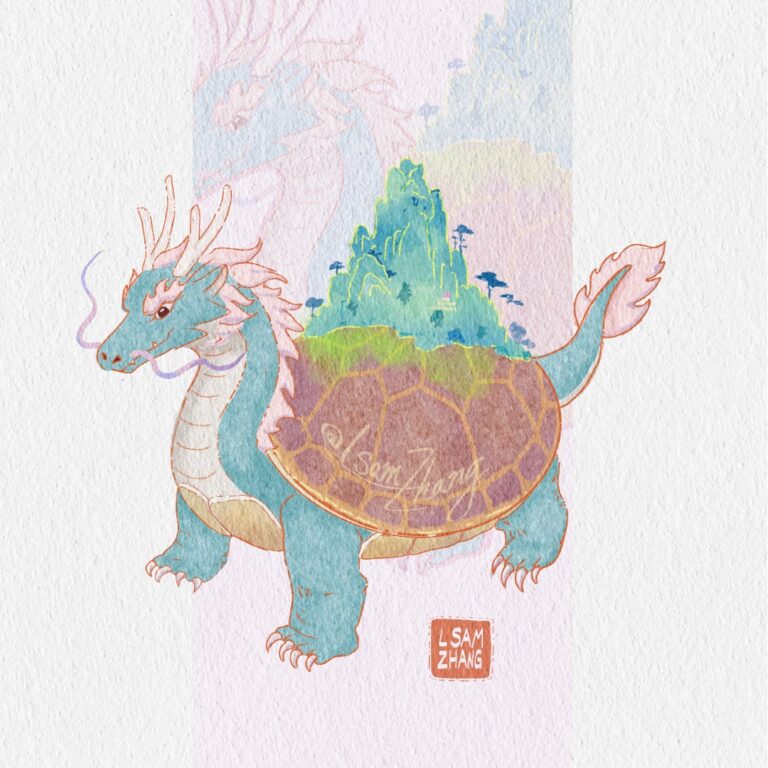
Yet, even with the hole sealed, the sky was still tilted toward the northwest where the pillar had broken. The sun, moon, and stars shifted in that direction while the land sank toward the southeast, causing all rivers to flow that way, flooding the land in between. Nüwa knew she had to provide a new, permanent foundation. Thus she journeyed to the vast eastern sea, where she subdued a majestic giant turtle Ao (鳌).5 With great respect, she cut off its four colossal legs and used them as the new pillars to hold up the sky at the four corners of the world.
With the sky now stable, Nüwa turned her attention to the devastating floods below. She went to the river and slaughtered the Black Dragon—the evil incarnation of Gonggong the water god. She then gathered massive amounts of reeds, burned them, and used the resulting ash to plug the surging floodwaters, allowing the rivers to return to their original courses.
The crisis was finally over. With the world safe once more, Nüwa and her brother went on to repopulated the world (which is a story we already covered last time).
To this very day, a beautiful reminder of Nüwa’s sacrifice and her great love for humanity is visible to all. According to legend, Nüwa’s luminous, five-colored patch of the sky can still be seen today as the rainbow—a colorful, divine light set into the heavens, so that all who witness it remember the goddess who saved the world.
Historic Deep dive
The dichotomy within us all
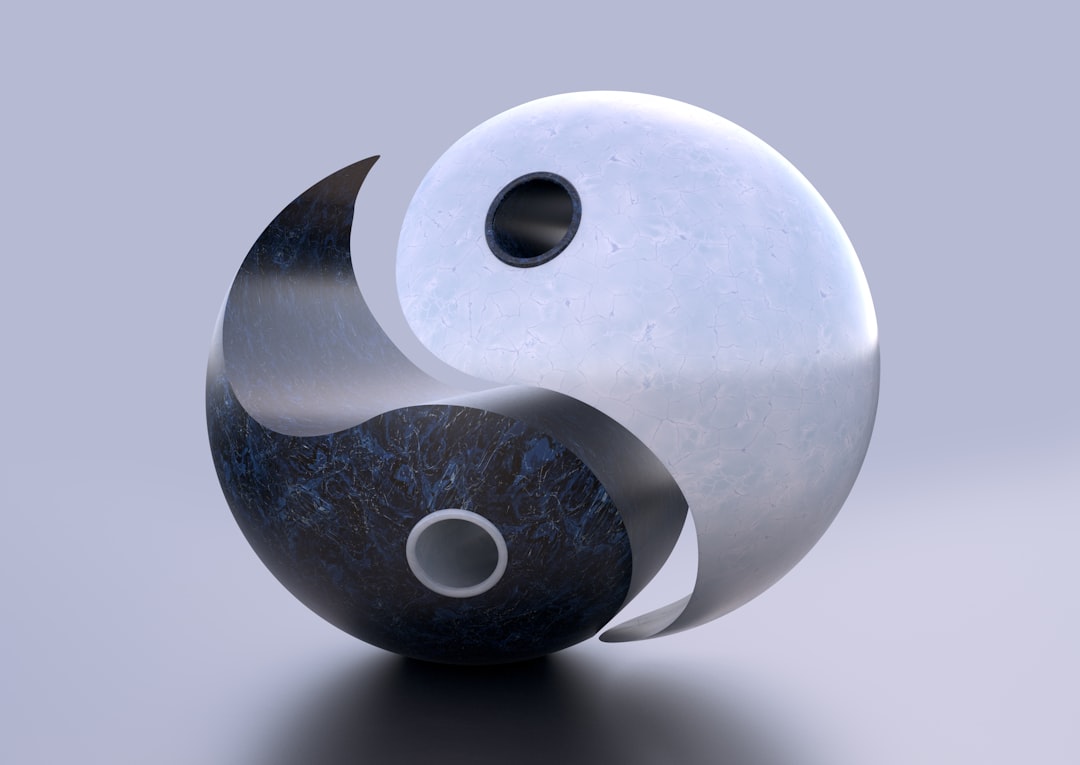
It’s interesting that the water god is a descendent of the Flame Emperor, while the fire god is also assigned as the god of the South Sea. Rather than being purely associated to an element, each of them contain a bit of their opposite, much like the yin-yang symbol. This thematic thread can be seen throughout Chinese legends. Nothing is purely black or white. Instead of a murky gray, everyone contains both black and white, and a bit of their opposites within those too. It’s all about balance. Being too evil, or too good, would both lead to problems.
The cause for the fight between the fire and water god
The most straightforward interpretation according to Huainanzi6 is that the two gods simply fought to determine who was stronger. Their fight is a mythological representation of the fundamental, constant struggle in nature between the forces of water and fire, order and chaos.
A second possible trigger for the conflict is jealousy. In my previous article on how Nüwa created humans, I mentioned that the first person to master fire was the leader of a matrilineal clan. But as Confucius ideals of subservient women took over during the Han dynasty, it made more sense for a man to have been the one who taught humanity how to use fire. Thus, in later stories, Zhurong was recruited for this role.
As the god of fire, people began to worship Zhurong, which made Gonggong furious. He is quoted to have asked:
“Water and fire are both necessary for life, why is only the fire god worshipped?”
Filled with resentment, Gonggong did not wait till after his defeat to bring disaster onto the world. In this version, his world-destroying actions seemed to be on purpose rather than an impulsive accident following his defeat. In this version, he and his monstrous ministers (like the nine-headed serpent Xiangliu) first extinguished the eternal divine fire (plunging the earth into darkness and cold) before attacking Zhurong. However, the floodwaters couldn’t reach the mountain peak where Zhurong lived. Enraged and humiliated, Gonggong then rammed his head into Mount Buzhou.
The more historical reason is a Game of Thrones-like fight for power. Clues from the Classic of History (Shàngshū) suggest that Gonggong was a minister of water management and public works. As a descendent of Yandi the Flame Emperor, he challenged the rightful ruler Zhuanxu,7 who was the Yellow Emperor’s grandson. (The fire god Zhurong is the descendent of Zhuanxu, but in this case, Gonggong clashes with Zhuanxu directly.)
In these early days of antiquity, an emperor wasn’t just a ruler of the human world but a ruler of both the mortal and celestial realm. Like every “hero”/main character in Chinese legends, Gonggong rebelled against the established order. He enlisted followers, launched an attack on the celestial palace, but he failed (and thus he’s not as famous as Nezha, Erlangshen, or Sunwukong the monkey king, who all relied on their own powers rather than raise an army).
The source of the legend most rooted in real historic events is one of clan wars. For millennia, Chinese scholars and historians have viewed the myth behind the great flood as distorted memory of real prehistoric events. They proposed that it symbolized a series of inter-tribal wars between two major ancient Chinese clans: one that worshipped fire and another that worshipped water. Their conflict was a struggle for dominance, with the battle’s outcome representing the supremacy of the agricultural, fire-using central plains tribes (associated with the Yellow Emperor) over the flood-prone tribes of the eastern seaboard (associated with the Flame Emperor). The war depleted resources, disturbed the peace, and interfered with the usual works performed to prevent the annual flood damage. The deaths, diseases, and famine that accompanied war combined with the massive damage from a particularly destructive flood, and perhaps meteorite impact event. The descendants of those who survived spoke of the disastrous period from their understanding of the world, one that’s governed by gods and forces beyond human reckoning.
Footnotes
- 共工 (Gònggōng; lit. “pubic work”): This water god is a descendent of Yandi (炎帝; lit. “Flame Emperor.” One of the Five Emperors of Antiquity.) It is also the title given to officials responsible for water management and public works.
↩︎ - 祝融 (Zhùróng; lit. “wish melt”): This fire god is the descendent of Zhuanxu (one of the Five Emperors of Antiquity; see footnote 7). His name is later used to denote disasters that involve fire. Also known as the god of the South Sea.
↩︎ - 不周山 (Bùzhōu Shān; lit. “incomplete mountain”): One of the heavenly pillars, the mountain gets its name from having been damaged by Gonggong. Based on the geographic location, some scholars believe it to be the northwestern peak of Mount Kunlun. Others believe it to be the Pamir Plateau, a high-altitude region in Central Asia historically known as the “Roof of the World” (referred to in ancient Chinese texts as “Scallion Ridge” 葱岭 where wild scallions grew). Interpretations of the Classic of Mountains and Seas would also suggest that the mountain is near Luoyang in Henan Province.
↩︎ - 昆仑山 (Kūnlún Shān): A uniquely sacred location in Chinese mythology, Kunlun is the “Ancestor of All Mountains” equivalent to Mount Olympus. It is the central pillar connecting heaven and earth, serving as the celestial capital of the gods. It’s name is likely a transliteration of a word from an ancient Central Asian language (possibly Tocharian).
↩︎ - 鳌 (áo): A giant primordial sea turtle, one of the nine sons of the dragon king. Outside of the Nüwa legend, Ao turtles are also known to carry the floating islands of the immortals on their backs.
↩︎ - 淮南子 (Huáinánzǐ; lit. “south of the Huai river, master of”): A classic philosophical text from the Han Dynasty (2nd century BCE). It’s often described as a “master of syncretism” because it blends ideas from several schools of thought, primarily Daoism. Much details of the legend of Nüwa patching the sky was first recorded in this text.
↩︎ - 淮南子 (Huáinánzǐ; lit. “south of the Huai river, master of”): A classic philosophical text from the Han Dynasty (2nd century BCE). It’s often described as a “master of syncretism” because it blends ideas from several schools of thought, primarily Daoism. Much details of the legend of Nüwa patching the sky was first recorded in this text.
↩︎